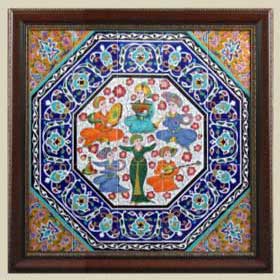
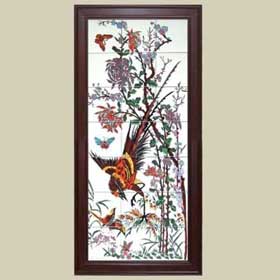
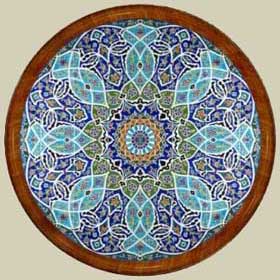
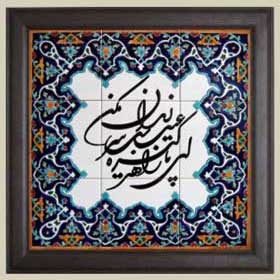
Introducing the history of Khak Negar Moghaddam
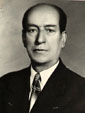
Master Hossein Khak Negar Moghaddam-the establisher of khak Negar Moghaddam tile making factory-was born in 1263 solar year. His father was Ostad Javad who was famous for being a great painter in plaste working which is called landani kari nowadays. Most of his works were on plasteworks of palaces during Ghajar Reign. Especially Golestan Palace.
Ostad Hossein who was 10 years old worked with his father at that time. That was the time he found out the brush and the paint. He was only 14 when his father passed away and he kept living with his mother and younger brother. There were 3 or 4 painting workshops in Tehran, since he knew the job, he started working in one of them. After a while there was a competition among the masters of these workshops. Since the little Haj Hossein had skillful hands every single one suggested more salary and asking him to work with them.(Since he was born At Ghorban feast everyone called him Haj Hossein.)
In 1281, when he was 18, he established a workshop which was called ” Haj Hossein workshop ”and started making seven-color tiles. It’s good to know that every tile artist had to do all the process of making a tile in his own workshop and in other words he had to know tile making, glazing, designing and painting. All the process was done by himself. Calligraphy was the only thing he never did himself and he asked some well-known calligraphists to write on tiles; for instance Master Emad Alketab was one of them.
At that time the designs on the tiles were inspired from foreign models that were imported to Iran in different ways. The natural shapes of flowers were used in them most which was called foreign bushes, later. These designs can be seen in tiling during Ghajar reign.
But Master Hossein Khak Negar Moghaddam didn’t follow these kinds of designs which were inspired by imported works and He used original Iranian designs through studying Safavie reign. The other tile makers were impressed By his works on the top of mosques, buildings or other places around Tehran. That’s why you can see a lot of tile works with the design of Safavie reign but not foreign designs.
He got married in the same year. He had four children-two boys who were called Ebrahim and Abbas and two girls. There were no ID cards at that time so everyone was called by the name of his job. Master Hossein signed his name as ”Haj Hossein kashichi” under his works. At the time of Sardar Sepah, they asked master Hossein to tile the top of the building of Melli Garden which is one of the most beautiful buildings of that time. Master Hossein painted the faces of the soldiers the weapons and designed the flowers himself. It’s still there and you can see his autograph on the cornerof it.
When Marmar palace was going to be made, all the masters of this art were invited to do a part of it and participate in making it. The tilling of the dome which was similar to Sheikh Lotf Allah mosque, was done by his brother-Master Ahmad Arsh Negar-and tilling the transom Which is well-known as ”Sangi Sardar” was done by Master Hossein. This work could be called the greatest masterpiece of his works.
These were years in which Dr. Ali Asghar Hekmat who was one of the noble and sophisticated people in Iran suggested Master Hossein to use the word “Khak Negar” as his family name; which means a person who makes things from soil. And since Master Hossein was the first one who was going to choose this name he suggested him to add the word “Moghaddam” which means ”The first one” to the end of his family name and master Hossein accepted that.
Master Hossein Khak Negar Moghaddam received a medal from the late Dr. Ali ASghar Hekmat who was the minister of culture, endowments and industry. Master Hossein didn’t stop his artistic activities up to 1330 and never stopped managing the production of seven –color tiles which has been a family job; until he passed away on the second of Farvardin (April) in 1341.
There are lots of his works are mentioned below:
• Tilling the transom of Melli Garden (Has been registered in the Cultural Heritage)
• Tilling the water tower of Melli Bank (Has been registered in the Cultural Heritage)
• Tilling the transom of Marmar palace which is well-known as “Sardar Sangi”
• The raised design Painting of Anooshiravan High school in Tehran (Has been registered in the Cultural Heritage)
• All the paintings of Nobonyad schools between 1310-1330 in which Master Emad Abd Alketab had done the calligraphy of them.
• The first tilling of Alborz high school in Tehran at the time of Dr.Jordan
• The tilling of Hazrat Abd Alazim portal
• The tilling of Imam Zade Abd Allah in Rey
• And other works which has been on the façade of the buildings in Tehran that some of them still exist.
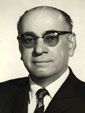
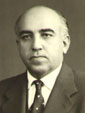
Master Ebrahim Khak Negar Moghaddam-born in 1281-and Master Abbas Khak Negaer Moghaddam –born in 1288- worked with their father since the rate of house building was increasing; they thought it was a good idea to produce simple tiles in addition to following their father’s art. Usual tiles were made by wooden templates and the edges of the tiles were not flat so after kilning the tiles they had to scrape the four sides of them that not only took a lot of time but also didn’t have a good result in the end. This result made them think about a better way. They had to use metal templates and pressing. To do this project they relocated the old workshop which was on Sepah street (Now it’s Hakim Nezami school) to a place out of Tehran (Now it’s Helale Ahmar street) which was 3500 square meters and they established a well-equipped factory and soon after that they had 170 workers in there.
In 1322 importing porcelain dishes was not possible because of the Second World War so they started making them with potter’s wheels and later with plaster templates and metal ones. People liked the dishes and some of them were exported to the countries around Iran. In all these years there was always a part of the factory in which they made the traditional 7-color tiles. Even the porcelain dishes had some designs. After the Second World War importing porcelain dishes was gradually started. Since Iranian factories couldn’t compete with them this industry was stopped gradually and making simple tiles took its place for the second time. Importing foreign tiles was a threat for producing simple tiles so Internal tile makers tried to make better products. This factory took great steps, too.
In 1340s when automatic tile making factories were established (in which they used foreign machinery And glaze) traditional tile making failed but as mentioned 7-color tiles making workshop was still working, so this part kept on working and was the center of attention.
In all these forty years of activities these two masters never stopped searching and innovation in tilling and tile making and they completed this job.
They also made white glaze which never cracked on the tile and they decreased the diameter of the tiles from 2cms to 8mms, besides they started making anti acid and anti freezing tiles,too.Tiles made in this factory were the only ones that their glaze didn’t crack until foreign white glaze was imported to Iran. During those years this factory won two first degree medals from Mines and Industries department. Mosques’ mihrabs were decorated by inlay and it cost a lot at that time, but they could make mosques mihrabs with 7-color tiles beautifully and acceptable. So it boomed tilling in the mosques of Tehran and other cities. Besides by creating new designs in 7-color tiles they could reconcile the buildings in the city with tilling. There have been many of these works on the buildings in Tehran since 1340. Master Ebrahim Khak Negar Moghaddam in 1348 and Master Abbas Khak Negar Moghaddam in Khordad 1357 passed away.
Here are some of their works:
• The tilling of a building in Golestan Palace well-known as Elizabeth dormitory
• The tilling of Kotobe Moghaddase Society in 30 Tir street
• The tilling of a gym in North street of Park Shahr
• The tilling of inside Sadi’s shrine in Shiraz
• About 60 raised designs and gilding for Shir o Khorshide Tehran Society and other
• Cities which they were collected after changing the name of the society to Helale Ahmar and other 200 paintings in Iran.
Three of Master Abbas’ sons continued his job. Master Esmaeel who was born in 1309,Master Mansour born in 1311 and Master Saeed who were the third generation of this family was born in 1320.
Two of them-Esmaeel and Mansour- started their job in the factory from teen years.They were into making industrial tiles and they managed everything in the factory. It’s good to know that they also knew how to make 7-color tiles and designing.
Master Saeed Khak Negar Moghaddam who was younger than the other two, joined them in 1342 and started his job in 7-color tile making department. Since 1344 the factory got smaller and they just made 7-color tiles. It was the same year in which Master Mansour Khak Negar Moghaddam left them and continued his job in another workshop. Master Esmaeel and Saeed Khak Negar Moghaddam worked under their father’s supervision. The oldest son-Master Esmaeel- did the practical jobs such as providing the color choosing ,the order of the fixing the tiles and making contracts and Master Saeed did the designing, chose them, did the paintings. So the workshop was being managed by the family. In order not to use their art just in mosques, the third generation intended to continue its ancestors’ art and promote traditional designs and sometimes the modern ones on the façade of the buildings so people could see this kind of art in other places too and know what it was. They were somehow successful in making people aware of this art.
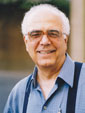
Master Saeed Khak Negar Moghaddam could learn designing in a short time with the help of his grandfather and the late Master Rassam Arab Zadeh who had done some artistic jobs in the first and second period with them. At that time some famous masters of calligraphy like the late Hassan Zarrin Khat, the late Foradi for Nast’aligh (Persian calligraphy) and the late Mohammad Saneie ,the late Master Morteza Abd Alrasooli for Naskh (A kind of Persian calligraphy) and Sols (A kind of Persian calligraphy) helped them with the calligraphy and after their death the Khak Negar Moghaddam family could replace no one. Master Saeed Khak Negar Moghaddam does some artistic designs on the Ceramic, too.
Here are some works of the third period:
• Tilling Bakhtiari’s Hosseinie in Hamedan
• Tilling Amir Soleilami Hosseinie in the South street in Park Shahr
• Tilling the transom and yard of Firooz Abadi mosque in Shahre Rey
• Tilling Shahmirzad Elmie school in Semnan
• Tilling Hosseinie of Ayatollah Marashi Najafi in Ghom
• Tilling the grand mosque in Tooyserkan including the Mihrab and the grand inscription in the covered part of the mosque
• Tilling Shahid Afshin kave gym in Tehran
• Tilling three mosques completely in Dashti and Hormood in Larestam (including the dome, mihrab and the top of the minarets)
• Tilling Ghamare Bani Hashem Hosseinie in Saadi street
• Tilling Shahmirzadiha Hosseinie in Neka
• Tilling the transom of medical university of Tehran
• Tilling about 170 mihrabs in Tehran and other cities and tilling about 7000 meters inscription of Qoran’s Verses in mosques which all of them have the autograph of the producer Khak Negar Moghaddam including the dates.